Case study
Hilliard Coaching
A hand-coded site for an executive coach, built to be owned outright rather than rented by the month.
Executive & leadership coach · 2020 → 2026 · Site, build, legal pages, SEO · Claude Design · Cloudflare Pages · hand-coded
Live site: hilliardcoaching.com
The brief
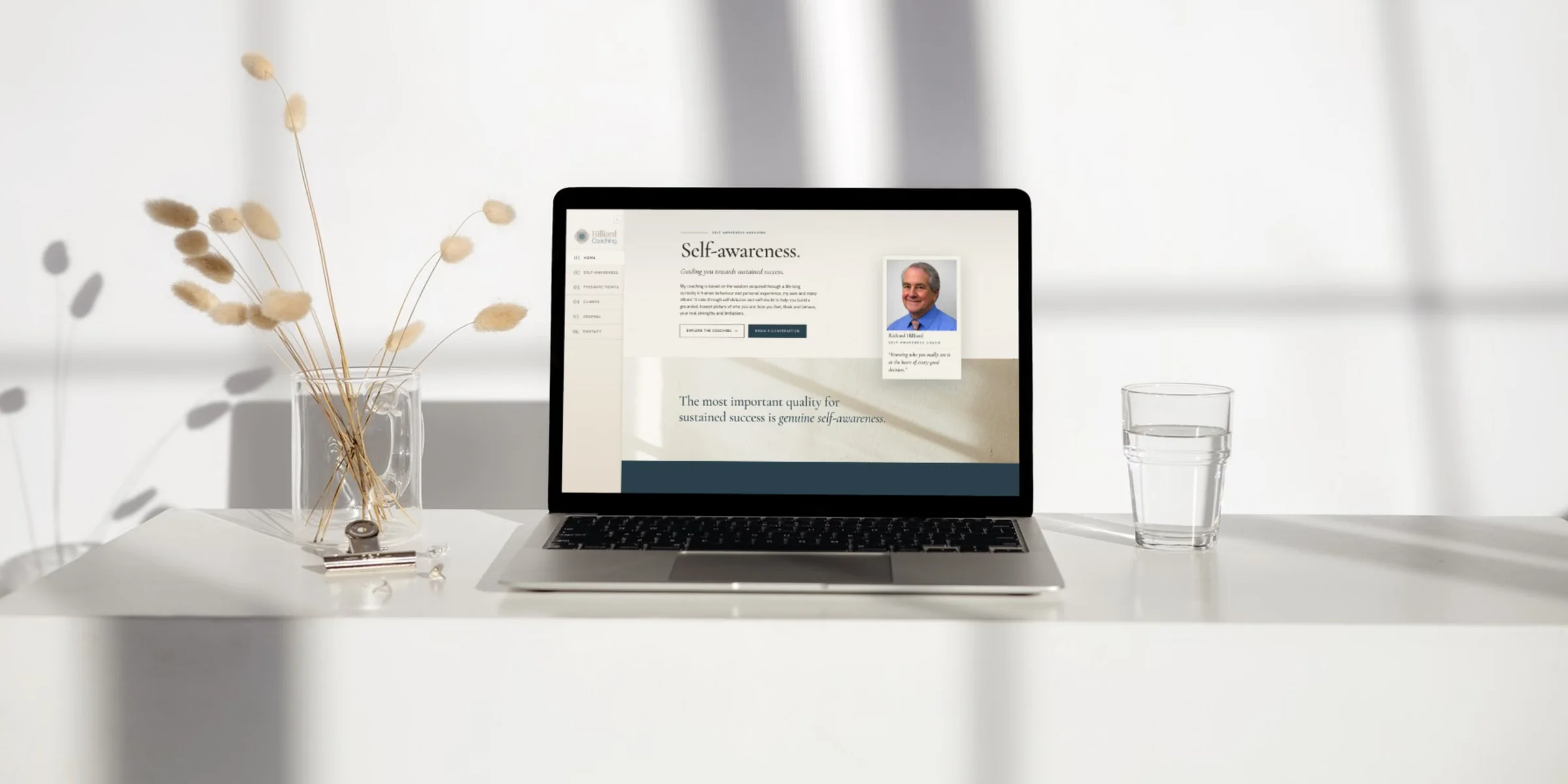
Richard Hilliard has spent forty years working across the world, and four more coaching leaders at the London Business School. He wanted a site that read like that. Quiet, literary, unhurried. Somewhere to set out the work, point to his writing, and let the right people reach him.
I first built his site some years ago. This year we rebuilt it from scratch as a hand-coded site on Cloudflare, off the platform subscription he had paid for years to host a few pages that change once or twice a year. That is the usual shape of a small site: an about, a list of services, a way to get in touch, and a monthly bill for a machine doing a fraction of what it costs to run.
What I built
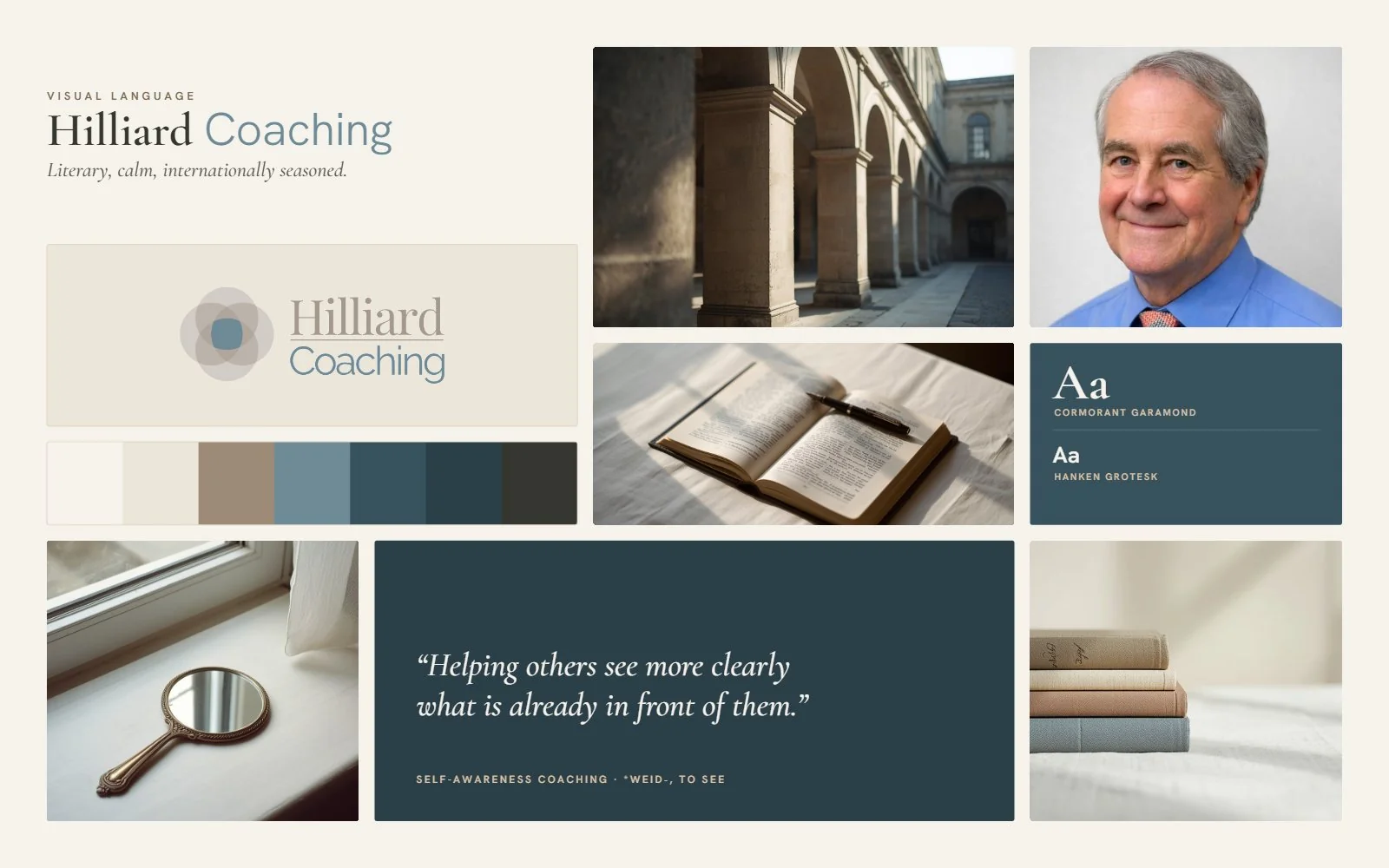
The design is paper-toned and serif-led, closer to a well-set book than a website. A slim navigation rail runs down the left edge rather than across the top. That was my decision, not part of Richard's brief. It keeps the menu out of the way of the reading and gives each page the feel of a margin, which suits a practice built on attention.
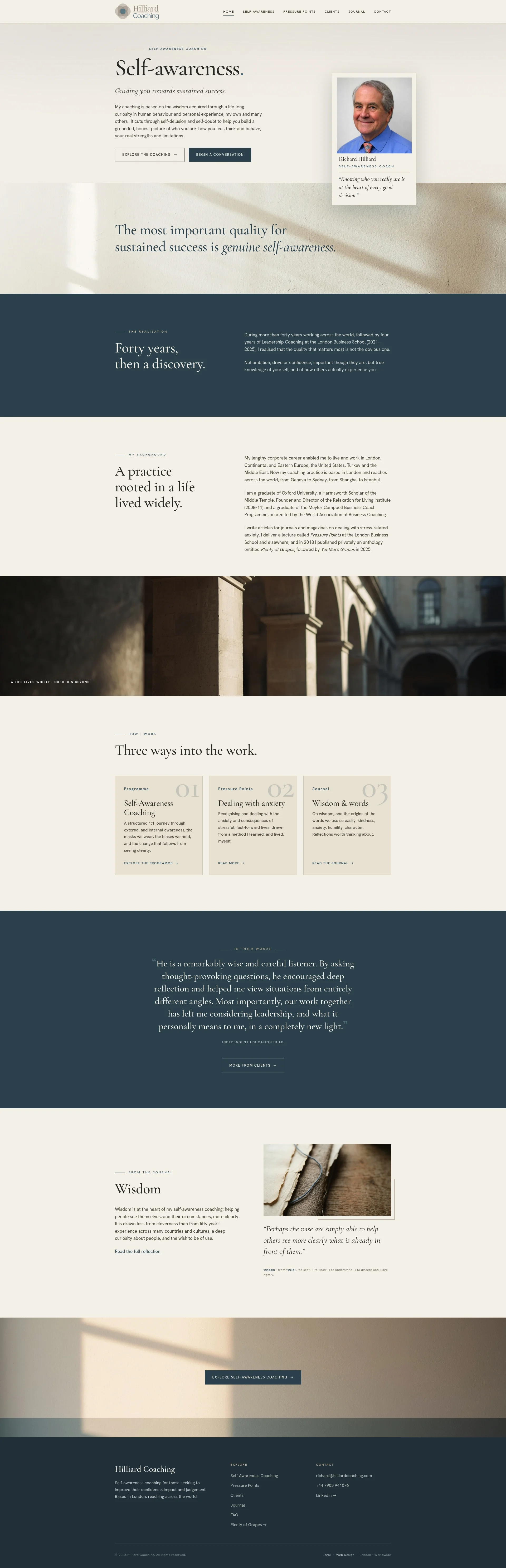
The homepage moves through one idea. A hero that states the work, a dark band where Richard names the thing forty years taught him, a short life history, and three routes in: the coaching, his Pressure Points talk on anxiety, and a journal on the words we use without thinking. The footer carries a small etymology, wisdom traced to a root meaning to see. Touches like that separate a template from something made for one person.
It is hand-coded and runs on Cloudflare, which costs almost nothing to serve. When it was done I handed Richard the lot: the code, the fonts, the images, the text. If he ever wants another designer, he gives them a complete site to read rather than a login to a platform he was renting.
He owns the files outright. If he ever moves on, he hands over a website, not a password.
What owning it means
There is no monthly platform fee keeping the lights on, and no template shared with a thousand other coaches. The look is his alone. The trade is that he does not log in and restructure the pages himself, which for a site that changes once or twice a year is the right shape.
It is not frozen, though. Small edits come back to me and usually go live the same week, so Richard is free of the upkeep without being shut out of his own site. The quiet does not rule things out either. A booking calendar, a contact form, a newsletter signup, even a small shop: each drops in through a third-party embed when he wants it.
It suits a particular client. Someone who wants a calm, distinctive site that loads quickly, who would rather own it than rent it, and who is content to let it sit still between updates. Coaches and consultants, mostly. Publish something new most weeks and a platform's editor will serve you better.
The full homepage
Where AI fits, and where it doesn't
Hand-coding used to be slow, and slow meant expensive, which is why small clients were quietly pushed towards templates. Working with Claude, I write and refine custom code far faster than I could alone. That is what brings a bespoke site within reach of a one-person practice, and it is where the misreading starts.
You cannot hand a brief to an AI and get back a finished site. What comes back is quick, plausible, and often quietly wrong. The value is in the judgement around it.
One case from Richard's build. The first version of the navigation switched between the desktop and mobile menus by screen width, the standard approach, and it looked right. Turn an older phone sideways and it broke: in landscape the handset is wider than the cutoff, so the full desktop menu loaded onto a phone. The fix was to read the kind of device rather than the width of the screen. An AI writes the width-based version without pausing, because it is the common pattern. Noticing that it fails on a landscape phone, and knowing why, is the human part.
Catching it meant turning a real phone in my hand and watching. None of that is a failure of the tool. It is the ordinary distance between something that runs and something that is right, and closing that distance is the work.
Why it was worth coding by hand
Most brochure sites pay rent on capability they never touch. What makes a hand-built one worth having is not the code, which is faster than ever. It is the judgement: the noticing, then deciding what to do about it, neither of which an AI manages alone.
Richard kept a site that looks like his practice and belongs to him, hosted for next to nothing. The bill that used to arrive every month simply stopped.