Case study
Skin Resonance
A sound-frequency skincare brand, built end to end: research, brand, the web app, the science, the journal, and the shop.
Beauty & wellness product · 2026 · Founder, brand, full stack · Claude Design · Cloudflare Pages · vanilla JS
Live site: skinresonance.com
From research to product
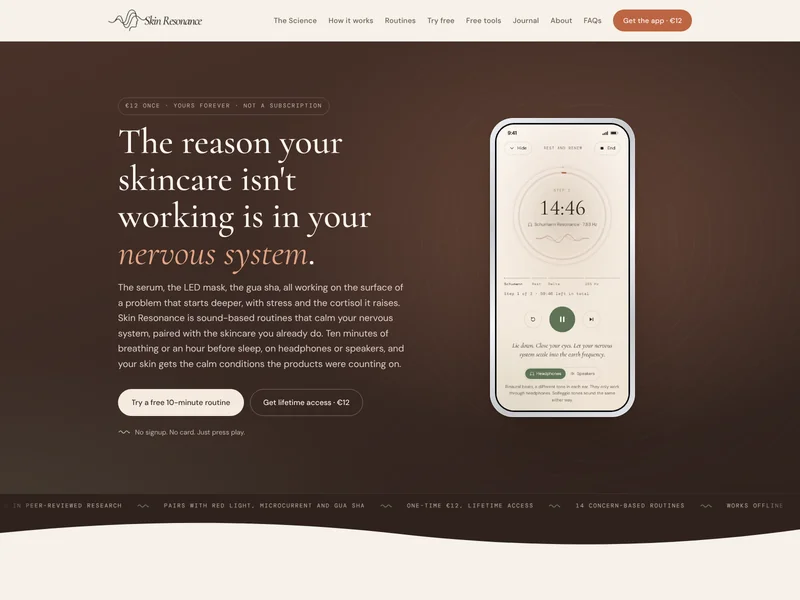
Skin Resonance is a product I built from research. Published studies on how chronic stress reaches the skin through hormonal pathways, how sleep deprivation degrades collagen, how sound can measurably lower cortisol. The connections were already in the journals. Nobody had turned them into something a person could use.
So I did. The product is a web app with fourteen guided frequency routines, a custom builder, five ambient soundscapes, session logging, and timing for the skincare tools you already own. It sells for €12 once and runs on any device with a browser and headphones.
One platform, off Squarespace
The first version split the work across two platforms. Squarespace ran the marketing site and the shop; Cloudflare ran the app. Rebuilding with Claude collapsed that. Everything sits on Cloudflare now, and the whole marketing site is plain static HTML with a few small vanilla JavaScript files for the header, the taster player, and the journal filter. No React, no build step. Nothing runs at the back.
Each page is a self-contained file with its own header and footer, rather than components assembled in the browser. A deploy is a folder upload to Cloudflare Pages. It loads instantly, has nothing to break at runtime, costs nothing to host, and will still work in a few years. For a site that is mostly content and one product, that is usually enough.
A deploy is a folder upload. Nothing runs at the back to go wrong.
Selling a paid app with no accounts
The part people find surprising is the shop. Payment is a Stripe payment link. When a payment clears, a Stripe webhook calls one Cloudflare Worker. The Worker mints an unguessable access token, stores it in a Cloudflare key-value store, and emails the buyer a private link to the app through Resend.
The link is the login. No account, no password, no database of users to hold and protect. The app lives at app.skinresonance.com, and the same Worker checks the token and quietly proxies the real files from a private path, so where the app actually sits is never exposed. A paid, installable app, delivered by one Worker and a key-value store.
The engine is the product
If you are selling sound, the sound has to be good. The tones are synthesised live in the browser with the Web Audio API rather than played from files, so transitions between steps are instant and the whole thing works offline once loaded. Under every tone sits a warm brown-noise bed, a low-pass filter tuned to each frequency, and slow amplitude modulation so a held note breathes instead of buzzing. Binaural pairs use the correct carrier and beat. Fades are clean, so pausing never jolts you.
It installs like an app. A service worker keeps it working offline, the Media Session API gives it a proper lock-screen player so a routine can be paused from outside the app, and a wake lock with a wall-clock timer keeps time even when the phone sleeps the tab. The free taster on the site runs this same engine, drawing its waveform from a real analyser reading the actual output, so what you hear before paying is the real thing.
Brand: grounded and warm
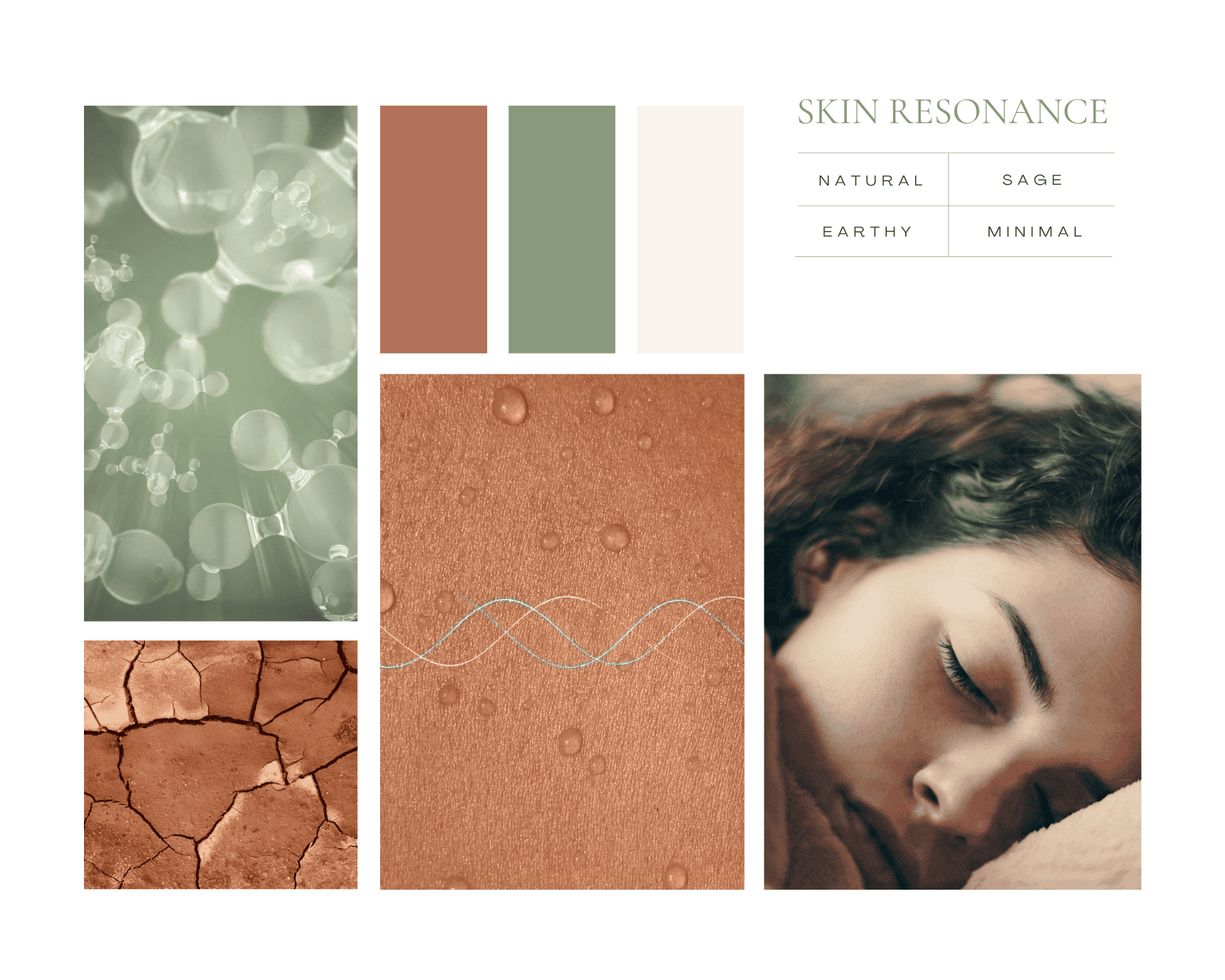
Clay and sage, Cormorant Garamond headings over a clean sans, custom line icons drawn to match, and a sine wave that runs through the logo, the app, and the site. The small choices do the work: heading weights softened so nothing reads heavy, warmth on the app's active screens instead of loud colour, sound names set in the serif so they read as titles. The whole thing stays quiet, away from the over-saturated, shouting look that fills the wellness shelf.
How it looks in production

A funnel designed to compound
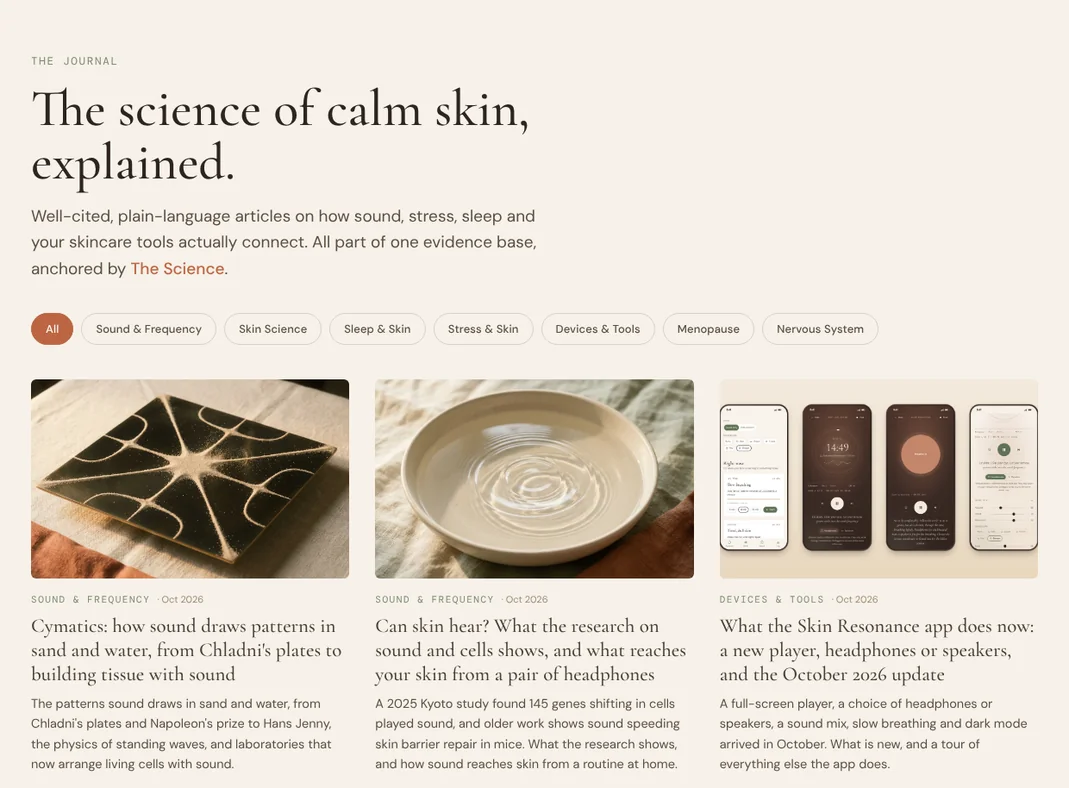
The science page names the journals it draws on instead of hiding behind "science-backed". Long-form articles carry full citation schema, each one funnelling to a specific routine and written to rank for the terms wellness listicles cover badly. The one-time price is framed the same way on every page, with future routines included. Each new article widens the search funnel a little further.
What I'd take from this
You rarely need a framework or a CMS to run a fast site and sell a product. Static files and a single Worker can carry a whole business. The separation that used to mean two platforms can be layers on one instead: static pages in front, the app behind a Worker, Stripe for the money, a key-value store for access, email for delivery. The demo runs the real engine, so anyone can hear the product before paying for it.